
The difference between a boarding facility your dog merely survives and one that feels like a vacation comes down to the questions you ask before you book. Websites look much the same from one place to the next, but the answers do not: how dogs spend the hours between meals, which vaccines are required and verified, who is supervising play, and how the building is cleaned between guests. A facility that welcomes those questions, gives tours, and offers a trial day is telling you something worth hearing. Pacing alone in a run for a week is survival; play, splash time, and a bedtime tuck-in is a vacation.
The Wagging Club is a family-run pet resort in Tampa, and boarding here includes a full day of daycare rather than a kennel run and two trips outside. A complimentary full-day evaluation comes before any stay, so the day you leave town is not your dog's first look at the place. Boarding options run from luxury suites with TVs to toy toss time, pool and splash pad sessions, enrichment activities, and a spa day. If a trip is on the calendar, come take a tour and see the whole place: UV disinfection between guests, webcams on the play areas, and the staff handing out bedtime treats.
Choosing a Boarding Facility: Start Here
- See it yourself: one visit shows you most of what matters, so ask to be walked through the kennels and play yards instead of the lobby.
- Ask the specific questions: staff-to-dog ratios, how playgroups get built, how often dogs go outside, and what gets cleaned between guests.
- Health rules protect your dog: verified vaccine records are what keep the dog two suites down from sending anything home with yours.
- Match the place to your own dog: a facility that can offer one-on-one time instead of a group yard is paying attention.
What Vaccines and Health Records Should a Boarding Facility Require?
A good facility asks for proof of rabies, distemper and parvo, and Bordetella, then verifies those records before your dog walks in. Close contact, shared air, and shared surfaces are all it takes to pass canine respiratory disease from one dog to the next, and a boarding facility has all three.
Enforced requirements are a green flag, because the dog with lapsed paperwork is the risk to every other guest. Expect questions about spay and neuter status too, since intact adults change the dynamic in a group yard. Puppies are their own case: ask when a young dog can join a group, and what their day looks like until the vaccine series is far enough along.
Which Illnesses Do Those Rules Guard Against?
Group settings raise exposure to contagious illness even when everything is run well.
- Viral: Parvovirus survives in soil and on surfaces for months and hits unvaccinated dogs hardest. Canine influenza and the mix of bugs behind kennel cough travel through shared air and shared water bowls.
- Bacterial: Leptospirosis lives in standing water and urine-soaked ground, which in a rainy Tampa week describes most of the puddles in an outdoor yard.
- Parasitic: Giardia moves through contaminated water and stool, and it's a common reason a dog comes home from any shared space with loose stool.
A place that asks a coughing or vomiting dog to stay home until they've been symptom-free for a few days is protecting every dog on the property. Kennel cough can take a few days to surface, so a cough, a runny nose, or a dog who goes off their food in the week after a stay is worth a call to your veterinarian.
What Should a Boarding Stay Include Besides a Place to Sleep?
A stay should cover the whole day rather than just the night, so ask what the nightly rate includes and what gets billed as an extra:
- Meals: how many times a day your dog is fed, whether they eat in their own space away from other dogs, and whether the facility feeds the food you send instead of switching your dog over to a house kibble.
- Outdoor and potty breaks: how often dogs get outside, who takes them, and what the routine looks like on an afternoon of hard Tampa rain. Ask about shade, water, and how long dogs stay out when it's 95 degrees, since heat builds fast in a humid yard.
- Quiet time: where a dog rests between play sessions, since a day with no downtime in it makes for a wired, overtired dog by evening.
- One-on-one attention: whether individual walks, cuddle time, and lap time come with the stay or cost extra.
- Grooming: whether you can add a bath and blowout before pickup so you collect a dog who smells better than the one you dropped off.
Here, supervised daycare is part of boarding instead of an upgrade, so a dog who's been busy since breakfast sleeps at night instead of pacing.
Where Will Your Dog Sleep, and Is the Building Safe and Quiet?
Ask to see the exact space your dog would sleep in, then look at what surrounds it. Kennel design changes behavior more than many families expect, with visual barriers between runs, sound-absorbing surfaces, and natural light all lowering the baseline stress of a stay.
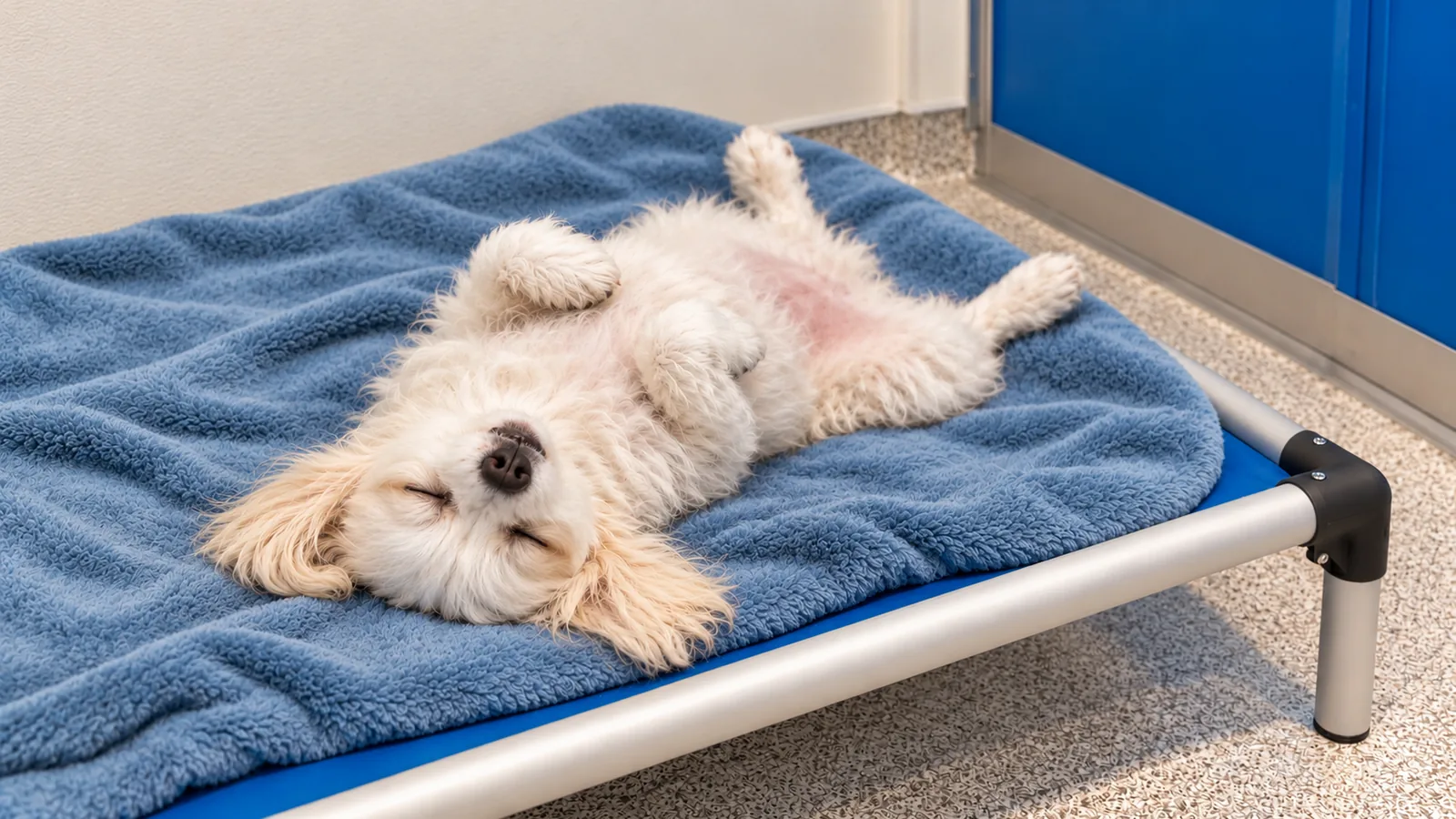
Housing ranges from open runs to wire crates to private rooms, and the details matter more than the label. Can housemates share a space? Is there a solid wall or a see-through gate between your dog and the one next door? Our luxury and classic suites are private rooms rather than runs, and the luxury version adds a TV, a private walk, cuddle time, and a bedtime treat.
Then walk the building with safety in mind:
- Fencing and gates: solid fencing, gates that latch, and a double-gate system between the yard and the parking lot.
- Check-in and check-out: a routine that never leaves a door open while dogs are moving through.
- Noise: a building full of barking is tiring for a dog even when nothing is wrong, so ask what keeps the sleeping areas quiet.
- The whole day, out loud: ask someone to describe it from the first potty break to lights out.
How Do Good Facilities Decide Which Dogs Play Together?
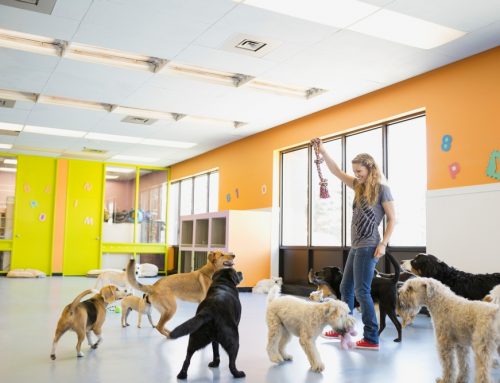
Good facilities sort dogs by size, energy, and play style rather than running one big yard, evaluate each dog in a group before the first full day, and keep private care available for the pups who do better with a person than a playgroup. Ask what the staff noticed about your own dog on the evaluation day.
| Your dog | The setup that usually fits | The question that settles it |
| Loves every dog they meet | Full-day group play with size- and energy-matched friends | How many dogs is one handler watching? |
| Fine with some dogs, done with others | A small group, a short session, or a split day of play and quiet | How do you know when my dog has had enough? |
| Would rather be with people | Private care, individual walks, and one-on-one attention | Is that available every day of the stay? |
| Senior, recovering, or on medication | A quiet suite and a predictable, gentle routine | Who gives the doses and watches for changes? |
How Do You Know Whether Your Dog Likes Group Play?
Dog tolerance sits on a spectrum, from dogs who greet every new face to dogs who would rather have the yard to themselves. The eight-year-old who loved a crowd at two may now want a quiet room and a person to sit with.
A lip lick, a tucked tail, a turned head, or a crescent of white at the eye is canine body language for please stop, and a handler who catches it early prevents a scuffle instead of breaking one up.
How Are Playgroups Kept Safe?
Safe group play depends on group size as much as on the matching, so groups stay small enough for one person to watch everyone, with rest breaks built in before the room tips into overstimulation. New dogs should meet a group a few at a time rather than walking into a full yard at once. Ask what staff do when one dog gets overwhelmed.
Toys, chews, and meals are the classic triggers for guarding and squabbles, so the safest play floor is a bare one, with high-value items and food bowls kept out of the group entirely and meals served in a dog's own space.
What Makes a Boarding Stay Feel Like a Vacation?
A stay feels like a vacation when the hours are filled with things a dog wants to do. Dog enrichment is mostly sniffing, problem-solving, water, and novelty, and a short stretch of real mental work can leave a dog as pleasantly tired as a long walk.
Pool time and splash pad sessions are an easy sell on a Tampa afternoon, and swimming is low-impact exercise that suits a stiff senior as well as a six-month-old with endless energy. Puzzle and food-dispensing toys, music or a TV for the dogs who settle better with background noise, a walk with one person, treats, and a bedtime tuck-in fill the rest of the hours.
How Can You Tell Whether a Boarding Facility Is Clean?
Judge a facility by its air and its routine rather than its lobby. UV air purification and real ventilation cut the airborne germs circulating through a building full of dogs. Ask what gets disinfected between guests, how the play floors are handled, and whether cleaning runs on a schedule or on somebody noticing.
Aerapy UV disinfectant lights run here, and suites and surfaces are treated between guests. Trust your nose too: a kennel room should smell like clean dogs and not much else.
Who's Watching Your Dog, and What Happens If Something Goes Wrong?
The staff matter more than the building, so ask how many dogs one handler covers, how they're trained to spot tension before it becomes a fight, and whether anyone on the floor holds pet first aid and CPR training. The handlers who spend the day with your dog are the ones doling out extra cuddles and treats, and they're also the first to notice that a pup left half their dinner or is holding up a paw. Our team all goes through first aid and Pet CPR training.
Then ask what happens if your dog gets sick or hurt. We don't provide veterinary care here, so any place you're considering should have a clear plan:
- Injuries get seen, not cleaned at home: a puncture the size of a pencil tip can hide crushed tissue and bacteria under the skin, so bite wounds need a same-day veterinary look even when they look like nothing.
- Which hospital: which veterinary hospital they'd drive to, and whether they'll call your own veterinarian first.
- How they reach you: how they'll get hold of you while you're out of town.
- A local backup: leave a second contact who's nearby and allowed to make a decision if your phone is off.
Why Should You Tour a Facility Before You Book?
A tour answers what a website can't: where dogs actually sleep, how the staff talk to them, and what the kennel rooms smell like in the middle of the afternoon. Ask for a walk through the kennels and play yards, and if a place won't show you, keep looking.
A trial day answers the rest: whether your dog settles after the first hour, whether they'd rather watch from the side, whether they'll eat somewhere new. Our complimentary full-day evaluation does exactly that, so set up a tour or a trial day a few weeks ahead of your trip while you still have time to act on what you learn.
How Do Medications, Special Diets, and Check-Ins Work?
Medications, prescription diets, and check-in routines all get arranged at booking, so be specific when you book the stay rather than at drop-off. Ask how you'll hear from us while you're away, whether that's webcams, a text, or a daily digital postcard.
| Tell us about | Ask us |
| Medications, and how your dog takes them | Who gives the doses and how the timing gets recorded |
| A prescription or sensitive-stomach diet | Whether to bag meals individually, and how food is stored |
| A senior dog, or one with a medical condition | How the day is paced, and whether a quiet suite is open |
| Separation anxiety or noise sensitivity | What a worried dog's day looks like, and who sits with them |
What Tampa Dog Families Ask Us Before a Trip
How far ahead should I book a boarding stay?
Book as soon as the trip lands on the calendar. Holiday weeks, spring break, and summer fill first. If your dog hasn't done their evaluation day yet, book that part first, since it's far easier to fit into a quiet week than into the three days before a flight.
Will my dog be sad the whole time I'm gone?
Many dogs settle once they've noticed the other dogs. The ones who have a hard time are often bored rather than homesick, which is why a full day of play, water, and attention does more than a quiet run will. You can watch it happen on the webcams, and the daily postcard tends to show a pup who is wet, happily tired, and completely fine.
What should I pack?
Enough food for the stay, bagged by meal, plus medications in their original containers with written instructions and a blanket that smells like home. Leave the expensive bed; we supply a variety of bed types and blankets. Bring your veterinarian's name, a local emergency contact, and a note about anything that's changed lately, like a new medication or a sore hip.
Send Your Dog on a Vacation of Their Own
The right place changes the whole trip: your dog gets pool time, a playgroup, and somebody handing out bedtime treats while you're gone. Reach out and we'll get you a tour at The Wagging Club in Tampa, show you the suites and the splash pad, and put your dog on the calendar before your trip.